
Island Life Daily Living Test
Philippine Wet Markets: How to Shop the Palengke Without Wasting Food or Money
The cheapest fish becomes the expensive fish when it rides home warm in a plastic bag. Philippine wet markets can make daily life fresher, more social, and more affordable, but the palengke rewards a man who knows what he will cook, how he will carry it, and how long the trip home really takes.
Walk the market as part of your relocation plan, not as a tourist attraction. Learn the units, compare the actual stalls, protect the cold chain, and measure whether this morning routine belongs in the life you want.
Income first. Plan second. Move third.
Sam follows the sound of knives before sunrise
The public market is already awake when the sky is still gray.
Composite example — Sam: Sam is 59 and renting a small apartment in a provincial city in Negros. He arrives at 6:15 with a canvas bag, a short list, and the confidence of a man who has watched several market videos. Then the aisle divides into vegetables, fish, rice, meat, dried goods, eggs, fruit, cooked breakfast, and household supplies. Prices may be by kilo, piece, bunch, tray, or pile.
A Filipina neighbor named Liza has agreed to walk with him once. She does not bargain dramatically or act as his interpreter at every stall. She asks how Sam plans to cook the fish, checks the size, watches the scale, and points out that his apartment freezer is barely large enough for two days of food.
Sam buys less than he expected: tomatoes, onions, leafy greens, eggs, two portions of fish, and rice from a regular dry-goods stall. The bag feels manageable. He returns home before the heat builds and cooks the fish that day.
His useful discovery is not that the market is cheap. It is that the market works when his kitchen, appetite, transport, and schedule work together. A bargain that spoils is not savings. A ten-kilo plan for a one-person refrigerator is not abundance. The palengke begins with tonight’s meal, not with the size of the display.
Philippine wet markets reward an early plan
A wet market—often called a palengke—is a public or private market where many goods are fresh, unpackaged, or perishable. The experience changes by city and municipality. Some markets are enclosed buildings with assigned stalls and clear sections. Others spread into side streets or combine permanent vendors with morning tables.
Go early enough to see a normal market, not merely the leftovers. Fish and produce selection may be broader in the morning, but “early” is local. Ask a neighbor or your landlord when deliveries usually arrive and when the market becomes crowded. Visit once on a weekday and once on your likely shopping day.
Carry a short meal plan. List the quantities your kitchen can hold, not the amount that looks inexpensive. Bring small peso notes, reusable produce bags, a washable tote, and an insulated bag with a cold pack for meat or fish. Wear shoes that handle wet floors. Keep one hand free for balance and do not set your phone or wallet on a stall.
Learn three questions: How much is it? What is the unit? Can I have only this amount? The price may refer to a kilo, half kilo, piece, bunch, pack, tray, or prepared portion. Pointing is useful, but repeating the quantity before weighing prevents confusion.
Do not assume every market is cheaper than every supermarket. Convenience, season, grade, origin, refrigeration, and buying quantity change the comparison. The value may be better flavor, a cut prepared to order, less packaging, or a vendor who remembers what you cook. Price is one part of the routine.
How to ask, compare, and buy without making the stall a stage
Start by watching. Notice whether regular customers queue, call out an order, choose their own produce, or wait for the vendor to select it. Do not reach across another customer, squeeze every tomato, or move fish with your bare hands. Ask before touching items that are being weighed or prepared.
Be clear and friendly. “Magkano po?” is a polite way to ask the price in Tagalog-speaking areas, but the local language may be Cebuano, Hiligaynon, Waray, Ilocano, or another language. You do not need a performance. A greeting, the product name, the amount, and a thank-you can carry the transaction.
If you compare prices, compare the same product and unit. A smaller fish, a different rice variety, or trimmed meat may not be equivalent. Ask the first price, look at two or three nearby stalls, then choose. Bargaining customs vary. A respectful request on a larger purchase is different from arguing over a small amount with someone selling perishable food.
Watch the scale and confirm whether trimming, cleaning, or cutting changes the final weight or price. If you want fish cleaned, say so before the work begins. If you want meat cut for adobo, soup, grilling, or another dish, describe the use rather than pretending you know the local cut name.
One market bag can contain five different decisions
Use this comparison to slow the shopping trip down. Every category has a different question.
| Stall | Look for | Ask | Carry it home |
|---|---|---|---|
| Vegetables and fruit | Firmness, damage, ripeness, and the amount you can finish. | Price per kilo, piece, bunch, or pile. | Separate soft fruit from heavy roots. |
| Fish and seafood | Clean handling, cold display where used, and no obvious off-odor. | Whole or cleaned weight, preparation, and when it should be cooked. | Leakproof bag inside an insulated carrier. |
| Meat | Orderly stall, inspection information, honest fresh/frozen labeling. | Cut, intended dish, source, and price unit. | Keep separate from produce and cooked food. |
| Rice and dry goods | Variety, clean storage, dry condition, and realistic quantity. | Price per kilo and whether a smaller trial amount is available. | Dry bag; seal at home against moisture and pests. |
| Cooked food | Clean utensils, protected display, active turnover. | What it contains and when it was prepared. | Eat promptly or store safely. |
The purpose is not to judge a market by imported supermarket aesthetics. It is to notice handling, turnover, labeling, and your own ability to carry food home and store it well.
Joe turns a cheap lunch into an expensive detour
Composite example — Joe: Joe is 63 and scouting a neighborhood outside Cebu City. He buys fish and chicken in the morning, then decides to stop for coffee, visit a hardware store, and look at two apartments. The insulated bag he meant to bring is hanging behind his rental door.
By noon, the sun is high and his groceries have spent hours in an ordinary tote. He cannot tell whether the food stayed at a safe temperature. Instead of gambling, he discards the most perishable items and changes dinner.
The loss bothers him, but the lesson is worth more than the purchase. A market routine includes the trip home. The Department of Health’s food-safety guidance says to keep clean, separate raw from cooked food, cook thoroughly, keep food at safe temperatures, and use safe water and raw materials. Its advisory also says not to leave cooked food at room temperature for more than two hours and identifies 70°C as a cooking target for foods such as soups and stews.
Joe changes the sequence: market last, direct trip home, raw meat and seafood separated, refrigerator space cleared before leaving. On apartment days, he buys only shelf-stable goods.
Meat and fish require more than a quick smell
Freshness cannot be proven by confidence alone. The National Meat Inspection Service says a Meat Inspection Certificate is official proof that meat was found fit for human consumption at the time and date of inspection and handled or packed under applicable rules. The certificate follows the product to its destination, where it then serves as a reference.
Ask the vendor or market office how inspected meat is identified locally. Look for orderly handling and clear separation. If a product is represented as frozen, chilled, thawed, or newly slaughtered, the description matters. In November 2025, the Department of Agriculture ordered tighter monitoring of supermarkets and wet markets and emphasized that frozen meat must be properly labeled and stored rather than passed off as fresh.
For fish, use several signals together: the stall’s cleanliness, product turnover, temperature control where applicable, appearance, texture, and odor. Ask when it arrived and when the vendor recommends cooking it. If something seems wrong, walk away without insulting the seller.
At home, raw meat, poultry, and seafood should remain separate from vegetables and cooked food. Use different containers and, where practical, separate boards or thoroughly cleaned equipment. Cook promptly or chill safely. If the refrigerator is unreliable during outages, buy smaller quantities and have an alternative plan.
Gear for the Island Life
Island Life merch, shipped by Fourthwall.



Mark buys for the man he imagines, not the man who cooks
Composite example — Mark: Mark is 52 and planning a move to Iloilo. He pictures himself cooking fish, vegetables, and soup every day. On his first solo market morning, the colors and prices make that future feel immediate. He buys three kinds of greens, a large piece of squash, bananas, mangoes, two fish, pork, eggs, and enough rice for weeks.
His kitchenette has one burner, two small pans, little counter space, and a refrigerator that freezes lettuce near the back. Friends invite him out twice. By the fourth day, greens are wilted, fruit is overripe, and the pork is still waiting.
Mark’s second trip begins with his calendar. He plans four meals, checks the refrigerator, and buys portions he can carry in one insulated bag. He tries one unfamiliar vegetable after asking the vendor how it is commonly prepared. He writes the actual spend and the food discarded at week’s end.
That number tells him more than a photo of overflowing stalls. His food budget must include restaurant meals, cooking fuel, drinking water, storage containers, condiments, transport, and a small waste allowance while he learns. It must also reflect whether he enjoys shopping and cooking often.
Your one-week palengke practice run
Use one week to measure the routine before rent or distance makes the choice permanent:
- Visit at your real shopping hour. Note crowding, heat, lighting, wet floors, and transport.
- Plan four meals first. Buy for the calendar you have, not the cook you hope to become.
- Write the unit. Record whether each price is per kilo, piece, bunch, tray, or pile.
- Compare like with like. Match variety, size, trimming, and preparation before calling one stall cheaper.
- Buy one new ingredient. Ask how it is prepared and use it within the week.
- Check meat inspection information. Ask how the market identifies inspected products.
- Read fresh, frozen, and chilled labels honestly. Do not treat different handling histories as interchangeable.
- Carry perishables correctly. Separate raw foods and go directly home with an insulated bag.
- Measure the full trip. Include waiting, transport fare, carrying, cleaning, and putting food away.
- Record waste. Price everything discarded, not only everything purchased.
- Check the kitchen. Count burners, usable refrigerator space, containers, water, and backup power.
- Compare one supermarket trip. Decide which foods are better bought in each place.
At the end, calculate cost per meal and the time you actually spent. Then give the routine an honest verdict: enjoyable and repeatable, useful for selected foods, or impractical from this address.
The best market is not the one that looks most cinematic. It is the one that helps you feed yourself safely, comfortably, and consistently.
Put the palengke inside your Freedom Number
Start with your seven-day record. Add the market purchases, supermarket items, transport, cooking fuel, drinking water, storage supplies, and food you threw away. Multiply only after the week resembles how you will really live.
Use official price data as a comparison, not as a promise. The Department of Agriculture’s price-monitoring portal publishes weekly averages, daily price indexes, and retail price ranges. As checked October 26, 2026, its current listings included a daily index dated October 24 and weekly averages through October 12–18. Your city, stall, variety, and quality can differ, so collect local prices too.
Your Freedom Number is the monthly amount that supports the whole life: housing, utilities, food, healthcare, transport, immigration costs, reserves, and the routines that make a place feel like home. Calculate it now because a kitchen, market route, or neighborhood choice can change the number before you sign anything.
If dependable pension, savings, or investment income does not cover the number with margin, build portable client income before the one-way ticket. One simple B2B service—such as missed-call follow-up, appointment reminders, review requests, or contractor lead follow-up—can be offered to a real business for a clear result.
HighLevel can be the delivery system for that service. It can organize contacts, automate approved follow-up, and document delivery. It is not a magic income button. It does not create clients, judgment, trust, or results by itself. Learn the service, sell it honestly, support the client, and build paid history before your Philippine life depends on the revenue.
Sources and editorial notes
Checked October 26, 2026.
- Department of Agriculture — Price Monitoring. Official weekly averages, daily price indexes, and retail price ranges are useful comparison points, not guaranteed prices at every market.
- National Meat Inspection Service — Frequently Asked Questions. Explains the Meat Inspection Certificate and its role as proof of fitness at the time and date of inspection.
- Department of Agriculture, November 14, 2025 — tighter checks on meat handling and labeling. The department said frozen meat must be properly labeled and stored and should not be passed off as fresh.
- Department of Health — Philippine Health Advisory on Food Safety. Summarizes the five keys to safer food, including cleanliness, separation, thorough cooking, safe temperatures, and safe water and materials.
- Republic Act No. 10611, Food Safety Act of 2013. Establishes the Philippine farm-to-fork food-safety framework and assigns responsibilities to national agencies and local governments.
Market hours, product availability, language, inspection practices, and prices vary by location and date. Verify the specific market, vendor information, LGU guidance, and current official sources before relying on a routine or number.
Composite examples: Sam, Joe, and Mark are fictional planning composites built from common relocation situations. They do not depict identifiable individuals.
Hero image is AI-generated and does not show actual workers, applicants, or a property.
Build your Island Life
Products connected to this guide. Orders and delivery are handled by Fourthwall.
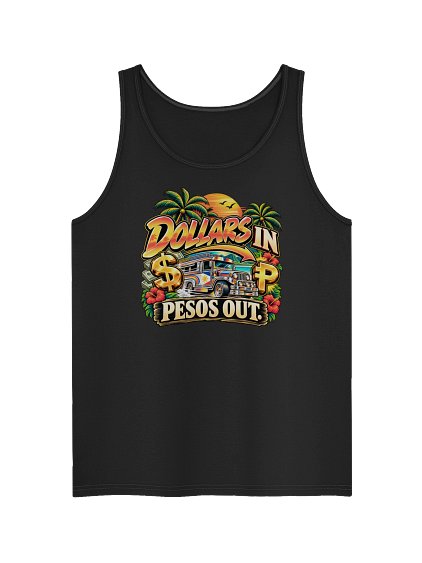
Dollars In. Pesos Out. Tank | Philippines Jeepney
Dollars in. Pesos out. Welcome to the Philippines. This jeepney tank is for men who know the exchange rate before breakfast and the…
Dollars In. Pesos Out. T-Shirt | Philippines Jeepney Tee
Dollars in. Pesos out. Sounds like a move. For men learning fast how life changes when the wallet switches from dollars to pesos.…
Moving to the Philippines. Build Your Island Life in 30 Days
Your island life starts at home. Before you book the flight, build the plan. Know what you need to pack, what to ask…